


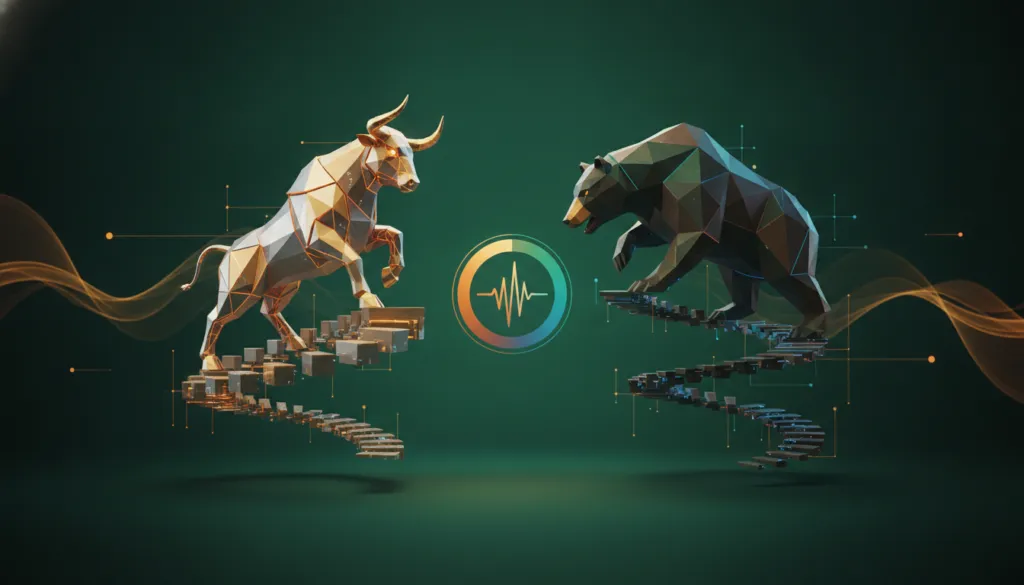
Crypto is famous for its dramatic swings, and two words capture the mood: bull and bear. A bull market is a sustained rise driven by optimism; a bear market is a prolonged decline driven by fear. Understanding these cycles — and the psychology that fuels them — is key to not getting swept away by either.
Where the names come from
The imagery is old market folklore: a bull attacks by thrusting its horns up, a bear swipes its paws down. A bull market means prices are trending up and confidence is high; a bear market means prices are trending down, often 20% or more from recent highs, with pessimism setting in.
What drives the cycle
Crypto cycles are amplified versions of normal market forces: liquidity and interest rates, adoption and new money entering, technological milestones, regulation, and for Bitcoin the halving‘s supply squeeze. We unpack these drivers in What Moves Crypto Prices.
The psychology
Markets are emotional. Bull runs breed greed and the fear of missing out, pushing prices past what fundamentals justify. Bear markets breed fear and capitulation, pushing them below. Recognising that you are not immune to these emotions is half the battle — the other half is having a plan before they hit.
Keeping a level head
You cannot reliably time tops and bottoms. What you can do is decide your strategy in advance: size positions you can hold through volatility, avoid chasing green candles or panic-selling red ones, and revisit our guide on setting targets and managing risk. Cycles end; discipline compounds.
The bottom line
Bull and bear markets are the rhythm of crypto — optimism and fear taking turns, amplified by liquidity, adoption and human emotion. You cannot control the cycle, but you can control how you respond to it. Learn what actually moves the market in What Moves Crypto Prices.
Sources & Further Reading
- Market trend (bull & bear markets) — Wikipediaen.wikipedia.org
- Business Cycle Dating — National Bureau of Economic Researchnber.org
- Monetary Policy — U.S. Federal Reservefederalreserve.gov